Snowed-In Heirs Tear Vintage Silk
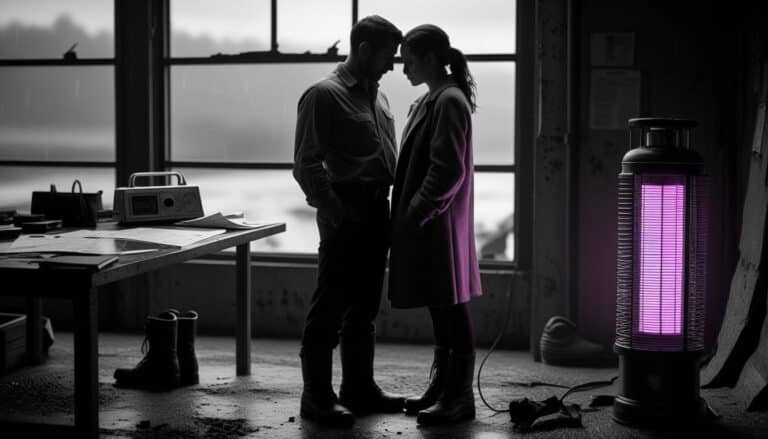
The fire had not been lit. The staff had not come. The lawyer had never made the pass. There was no cell signal, no generator hum, no second set of footsteps returning from the east wing. The furniture had been left too far apart. The unsigned documents lay on the table as if someone might still sit down and pretend the afternoon had a purpose. No one had taken off their outdoor layers completely. The great room of the chalet held its absences the way a church holds unsaid prayers: with a kind of architectural patience, as if the missing things might yet arrive if no one was vulgar enough to name them.
Constance did not look at the dark mouth of the hearth. She did not look at the papers. She did not look at the two feet of rug between the toe of her boot and the scuffed leather of his.
She looked, instead, at the cooling surface of her coffee, which she had not tasted and did not intend to taste. Steam died off it in thinning threads. Across from her, his mug was doing the same work more slowly, as if even the air around him had more heat to spend.
The generator had failed without drama—one moment the lamps had a future, the next they did not—and since then the room had been conducting a quiet inventory of what it would no longer do for them. Heat. Light. Exit. Audience. The ordinary solvents of civility.
Martin was down the hall. That, too, was a kind of absence: a body withdrawn into the cold east wing with a bottle and the particular sulk of a man who had expected to be richer by nightfall and had instead been asked to wait. Every so often the chalet creaked, and the creak might have been wind, or timber remembering it was timber, or Martin turning over in a bed that did not belong to any of them. Each sound arrived like a metronome. Not private. Not private. Not private.
Constance kept her knees together.
It was not modest. It was administrative. The posture of a woman who had spent the afternoon performing a board meeting in a dead man’s house, and who would, if the lights came back on, still be able to claim that nothing had changed except the weather.
Her coat hung open from her shoulders, its hem spilling over the back of the sofa she was not quite sitting on so much as occupying. The silk blouse beneath it was the color of bone left too long in a drawer. Vintage. Belgian. Seamed along the sides with the kind of invisible stitching that announced, to anyone who knew how to read clothes, that the garment had been built to outlast the woman. The skirt was heavier—wool, precise, the hem a decision. Her boots were still on. She had told herself, an hour ago, that she was simply cold. She had not told herself the other truth, which was that taking them off would have been the first concession, and she did not concede first.
She knew, with a clarity that embarrassed her, exactly where the blouse would split if someone stopped being careful. Left side seam, two inches below the dart. The silk there was old enough to have a memory. It would not tear like cheap fabric, in a long cheap scream. It would give at the stitch. A small sound. Catastrophic only to the person who had paid for permanence.
She did not look at Cross.
She was aware of him the way she was aware of the unlit hearth: as a fact the room contained and that she would not be the first to use.
Cross watched the place she was not looking.
Not her face. Not yet. The line of her throat where the blouse’s collar sat too correctly, as if the cloth itself had been instructed not to slacken. The still hands in her lap. The boots. The two feet of rug she was treating like a border.
He had spent half his childhood on remote timber sites and the other half being polished until he could sit at a board table without looking like he belonged in the woods. The polishing had taken. The woods had not left. He noticed strain the way other men noticed stock tickers. Heat. Breath. The particular tightness of expensive fabric when the body inside it was refusing to admit it had a body.
He did not fill the silence.
She was using it as armor, and he had sat through enough negotiations to know what happened when you rushed a woman who had decided that wanting first was a kind of loss. You got nothing. Or you got a performance of nothing, which was worse.
The coffee in his mug had gone the flat brown of wet bark. He had swallowed once, earlier, out of the animal habit of putting something in his mouth when the room asked him to be civilized. He had not tasted it. His throat had worked anyway. He felt her register that—the flex, the swallow—without looking at him. She collected evidence. She always had. That was what old money trained its daughters to do: notice, file, refuse to be moved.
Martin’s absence pressed on the walls. Drunk. Withdrawn. A living reminder that the great room was not a locked door. Cross kept his voice, when he used it at all, lower than the storm. The storm itself he refused to dramatize. Snow was only weather. Weather was only what happened when you built a chalet this far off the grid and then invited three unrelated heirs to argue over a dead man’s arithmetic.
“He should have stayed in the city,” Constance said.
It was not quite an opening. It was a sentence placed on the table beside the unsigned documents, as if it might belong with them.
Cross did not ask which he. Martin, obviously. Or the lawyer. Or the dead man. All of them should have stayed in the city. All of them had not.
“So should you,” he said.
Her gaze flicked up, then away. Not to him. Not to the hearth. To the dark window, which showed nothing but the idea of mountain.
“I don’t leave things unfinished.”
“This isn’t unfinished.” He nodded, barely, at the papers. “It’s unstartable. There’s no lawyer. There’s no power. There’s a drunk in the east wing who thinks proximity is the same as claim.” A pause, measured. “And there’s no fire.”
She did not look at the hearth.
Neither did he.
That was the first agreement they had managed all afternoon: the dark mouth of the stone, the stacked wood that someone—staff, or the dead man, or the last person who still believed this house would be used for living—had left ready. Lighting it would have been practical. Practicality, just now, felt like a confession. I am cold. I intend to stay. I intend to be here with you in a room that has heat.
Constance’s composure was a kind of architecture. Cross could see the load-bearing points. The knees. The still hands. The way she breathed only as much as the blouse required.
He wanted, with a clarity that should have shamed him and did not, to see what happened when one of those points was asked to carry more than it had been built for.
He did not move.
The minutes did not pass so much as accumulate. Breath. The dying steam. A gust that made the chalet’s bones speak, and both of them going still in the same instant, listening for Martin, for a door, for the particular clumsy music of a man who had taken a bottle to bed and might yet decide the great room was less lonely.
Nothing. Only wind.
Constance felt the listening in her teeth.
She had not come here to be a woman in the dark with a man who noticed too much. She had come because a dead billionaire—unrelated, unloved, theatrically precise in his malice—had named three heirs who had never shared a room without a lawyer present, and because refusing the summons would have been a kind of flinch. She did not flinch. She wore Belgian silk into the wilderness as a thesis: I am not the weather. I am the thing the weather happens around.
The thesis was failing.
Not loudly. That was the insult of it. The failure was occurring in increments too small to object to. The generator. The lawyer’s absence. Martin’s retreat. The two feet of rug. Cross’s throat, working around coffee he did not want. The fact that she knew the exact cost of the blouse and could, if she let herself, imagine the sound of it coming apart, and that the imagining did not feel like fear.
It felt like hunger with manners.
She despised the accuracy of that.
“If you’re cold,” Cross said, still not looking at the hearth, “you can say so.”
“I’m not.”
“I didn’t ask if you were. I said you could say so.”
Silence, again. She used it. He let her. The allowing was its own kind of pressure. Most men rushed to fill what she left empty, eager to be useful, or charming, or first. Cross sat inside the empty as if it were a chair he had a right to.
The lamp on the side table was a dead thing. Someone—she, perhaps, an hour ago, in a gesture of remaining competent—had reached for it already. It had not answered. It would not answer now. She reached anyway, because reaching for a lamp was a safe behavior, and the inventory of safe behaviors was shrinking, and she could feel the shrinkage the way one feels a room losing air.
Her sleeve extended into the space between them.
The back of his fingers met the wool.
Accident. Except it was not. Except both of them knew the difference and would, if asked in daylight, have called it nothing. The contact was brief, precise, insultingly modest: the knuckles of a man who had grown up around equipment and weather, finding not skin but the fact of her clothing, the nap of the coat lining, the heat trapped underneath. He was reaching for the same lamp. Of course he was. The lamp that did not work. The pretext that did.
Neither of them apologized.
Constance’s breath snagged, very slightly, at the top of the inhale, as if the blouse had issued a correction. She felt the seam at her side register the snag. Silk had no right to be so attentive. She sat back. His hand withdrew. The two feet of rug reasserted itself, smaller now, or the same, or lying.
Cross looked at his own fingers as if they had brought back evidence.
Wool. Warmth. The knowledge, useless and immediate, that she was not as cold as she was performing, or was colder, and that the performance was the point. He wanted to tell her that the lamp was dead and they both knew it. He did not. Telling her what they both knew would have been another way of filling her silence.
He said, instead, very low, because Martin existed: “The furniture was left too far apart.”
“Yes.”
“You didn’t move it.”
“Neither did you.”
“I didn’t ask you to.”
A gust. A creak. East wing, or wind, or the house reminding them it had been built by a man who liked the idea of being unreachable. Constance’s spine did not change. Her pulse did, a private incompetence she would not grant the room.
She thought of the will. Of the afternoon’s careful civility, the three of them around a table that had been meant for spectacle, performing the roles of people who could still be shocked by money. Martin had drunk first and hardest. She had not. Cross had not, or not enough to matter. The dead man’s arithmetic had sat between them like a fourth guest. Then the generator. Then the lawyer’s absence becoming permanent for the night. Then this: the great room, the unlit fire, the two of them circling a heat source neither would ignite, as if lighting it would be the same as signing.
She should have stayed in the city.
She should stand up now, walk to the east wing, wake Martin, insist on the farce of three people waiting together. Safety in numbers. Safety in the man who had taken a bottle to bed.
She did not stand.
Cross felt the decision not to stand as if it had weight, a physical object placed on the rug between them. He had been around enough withheld action to recognize it. Timber work taught you that the dangerous moment was not the cut. It was the long second before the cut, when the tree had not yet admitted what you were going to do to it.
He leaned forward.
Not a shift of his boot. He bent from the waist, forearms coming down over his knees, breaking the upright line that had kept the two feet of rug honest all hour. The chair did not move. He did not need it to. The lean brought his shoulders into the gap, closed the vertical plane of it, put the heat of him into air that had, until now, belonged to no one.
Constance’s knee registered the change before her mind did. He was close enough now, bent toward her like that, that if she uncrossed nothing, if she only existed, the wool of her skirt might learn the temperature of his sleeve where it hung off his forearm.
She kept the knees together.
The blouse knew she was holding her breath. She released it slowly, through the nose, the way one did in sittings and viewings and rooms where wanting was a vulgarity. The silk at her side eased, then tautened again, because easing was also a risk.
“You could light it,” she said, and still did not look at the hearth.
“So could you.”
“I don’t perform useful tasks for an audience.”
“I’m not an audience.”
“You’re sitting there.”
“So are you.”
The argument was not an argument. It was a tightening. Disagreement about the will, about the city, about the fire, none of it exploding, all of it driving the same direction: there was nothing left to do in this room that was not each other. He could not cut a path off the mountain. She could not dress her way out of the dark. Their usual instruments—his physical competence, her immaculate presentation—had been politely confiscated by snow and a dead generator. What remained was the other person’s body, and the intolerable fact of noticing it.
Cross’s hunger did not feel like a joke. It felt like weather moving in under the door. He understood her clothes. That was the problem. He understood what the blouse had cost, not in dollars—dollars were vulgar, and they both had too many—but in the language of permanence. He understood that a woman like Constance did not wear a garment like that into a snowbound chalet unless the garment was doing work. Armor. Thesis. A refusal to be reduced to flesh.
He was not going to treat it as sacred.
He was also not going to touch her until the touching could not be called an accident, and even then he would touch cloth first, because cloth was the argument, and he had never liked winning arguments by skipping to the end.
Another creak. Longer. Martin, possibly, or the east wing settling into its own cold. Both of them froze in the same small way: shoulders, breath, the animal calculation of how loud were we. They had not been loud. That was the trouble. Quiet made every inch louder. Quiet made the space between her knee and the arm of his chair into a country with a border dispute.
Constance’s pulse was an embarrassment. She catalogued it anyway, because cataloguing was control, and control was the last intact system. She knew the construction of the blouse as she knew the construction of her own reputation: where it would hold, where it would not, what it would cost to be wrong. The left seam. The dart. The vintage silk that had outlasted two owners and would, in any reasonable life, outlast her. To ruin it would be unthinkable.
The unthinkable sat in her lap with her still hands and waited.
She wanted—God help her, she wanted it with a specificity that felt almost scholarly—not pain, not humiliation for their own sake, but the violent undoing of the last thing she still governed. To be wanted past preservation. To have the costume of the heiress treated as disposable. The wanting had lived in her for years as a private, almost shameful attention to seams, to the places garments promised they would never give. She had never asked. Asking would have been being first.
Cross had not asked either.
He only sat there, bent toward her, timber and polish, watching her breath the way other men watched a ticker, and not lighting the fire, and not filling the silence, and no longer able to pretend the gap was still a gap.
She stood.
Or she began to. The decision arrived as posture: weight forward, hands leaving her lap, the beginning of a woman who would walk to the hearth or the hall or anywhere that was not this. A safe behavior. The last one. Standing was what people did when a room had failed them.
The coat went first. It slid from her shoulders as she rose, the one layer that left her without being asked, and she felt it go—the sudden lightness at the back of her neck, the heavy wool folding onto the cushion behind her—and noted it the way she noted everything, as a loss she had not authorized.
He came up out of the chair as she came up off the sofa, the two motions arriving at the same half-finished height.
His hand closed on fabric at her waist.
Not skin. He would not allow himself skin. The only place he would hold: the silk, and under it the hard edge of the wool waistband, the architecture of her, the place a man stopped a woman from leaving without claiming he had stopped her. His grip was not gentle. It was not cruel. It was the exact pressure of someone who had spent a lifetime knowing how much force a thing could take before it admitted what it was made of.
Constance did not sit.
She also did not complete the standing. She existed in the interrupted motion, his hand a fact at her waist, the blouse already under strain from an hour of held breath and withheld movement and the particular tautness of a woman who had been refusing to want. The silk had been waiting. She felt it waiting. The seam at her side, two inches below the dart, took the load of his grip and her halted rise and the whole careful afternoon, and for one stretched second it held, because it had been built to hold, because permanence was the point—
A thread gave.
The sound was small.
It was, in the unlit great room, with Martin somewhere down the hall and the storm doing its unspectacular work against the glass, the loudest thing that had happened since the generator died. Not a rip. Not yet. A single stitch surrendering its argument. Catastrophic only to the two people who heard it for what it was.
Cross did not let go.
He watched her face for the flinch.
It did not come.
What came instead was the look of a woman who had been waiting the entire hour for permission to stop performing, and who had just been given it in a language her clothes understood better than her mouth did. Her hands, which had been still, were not still. They did not push him off. They found the front of his sweater as if there needed to be a second point of contact to make the first one real. Her breath went out of her in a way the blouse could not correct.
He felt the fabric yield another fraction under his palm—not open, not ruined, only beginning, the seam starting to speak, the expensive construction remembering it was thread and not law. The ethical weight of it landed in him all at once: not the money, never the money, but the irrevocability. He was going to do this. She was going to let him. The fire was still unlit. The documents were still unsigned. The two feet of rug were gone.
He tightened his hand.
The next stitch had not yet decided.
Her mouth was close enough that he could have ended the hour with a kiss and called it romance. He did not. He stayed with the cloth, with the waist, with the sound of the stitch still hanging in the air between them, and he waited—they both waited—on the exact edge of the thing that, once it finished giving, would not be able to be put back.
The seam opened.
Not all at once. A second stitch, then a third, each one a small abdication, the vintage silk remembering it had been needle and not commandment. Cross felt it happen in his palm before he heard it: the architecture of her blouse admitting a fact it had been built to refuse. The sound was dry, intimate, almost polite.
Constance did not look down.
She looked at his mouth, which had not come for hers, and at the place his attention was—the cloth, the waist, the ruin beginning under his hand. The silk gave along the stitch and cool air found the line of her ribs, a thin shocking stripe, and she made a sound that was not a word and was not loud enough for the east wing. Her hands closed in his sweater. She looked more, not less, like herself. The blouse hanging open an inch along her side made her look like a woman who had finally authorized an expenditure.
He found the seam with his fingers and used it.
The next give was not a stitch. It was the line, and it did not stay low—his grip rode the tear upward as it ran, past the dart, up through the hollow of her arm where the sleeve met the body of the blouse, the armscye surrendering its stitching the way the side seam had surrendered its own. Silk parted under a pull that had nothing to do with care and everything to do with the hour they had spent not touching, with the two feet of rug, with the lamp that did not work, with every safe behavior they had exhausted. A longer sound than the first, still not a scream—Belgian construction dying the way it had lived, with precision. The blouse opened from her ribs to the dart to the shoulder seam itself, and Constance drew her arm inward, out of the loosened sleeve, an economical motion, almost helping, almost not. The bone-colored silk fell away from her skin in a ruined panel, and the cold of the great room, which they had been performing around for an hour, arrived on her bared shoulder without permission.
Constance’s breath went out of her as if the blouse had been doing some of the breathing.
She did not cover herself. Covering would have been the old architecture, the administrative knees, the thesis. The weather was on her now. His hand was still in the wreckage of the waist, torn silk and the heat of her underneath, and she stood in the interrupted standing and let him see the cost. Vintage. Belgian. Unthinkable. The unthinkable was hanging off her in a torn edge, and the wanting that rose in her was so specific it felt like relief.
This. This is the instrument that is left.
The ruined panel slid, and her shoulder was bare, and Cross’s mouth found it as if the broken seam were a door he had been invited through.
Not a kiss first. The heat of his mouth on the place the silk had protected, the place that had not been air in years. She felt him breathe there, felt the decision in it—he could have gone to her throat, her mouth, the easy geography of romance—and he stayed with the ruin, with the evidence, with the skin that existed only because the garment had lost. Her head tipped, a fraction, not surrender as collapse, surrender as authorization. The collar of the blouse, still correctly set on the other side, made the torn side look like a chosen violence. She wanted him to see it. She wanted the seeing to be part of what he did next.
A creak.
East wing, or wind, or timber. They froze the way they had been freezing all hour, the animal calculation running under the heat: how loud, how private, how much of this room still belonged to a drunk with a bottle. Nothing followed. No footsteps. Only snow against the glass, and his mouth on her shoulder, and the torn silk cooling against her hip where it hung.
“Not the skin,” she said, very low, and he went still against her, and she had to close her eyes against the rush of being listened to at the exact volume of a secret. “The other seam. Don’t be careful.”
She had not been first in the wanting. The thread had been first. He had been first with his hand. What she was now was precise.
Cross lifted his head.
Her pupils had taken the dark of the room and kept it. She was cataloguing him—she could not help it—the fact of his attention on the ruin he had made, the way his eyes went to the torn edge before they came back to her face. Her hands were not still. One of them had found the place at his nape where polish ended and timber began, not pulling, only present, a second point of contact to keep the first one from being able to be called an accident in the morning.
He put his hand to the intact side of the blouse.
The silk there was still doing its work, still announcing permanence, still seamed with invisible stitching that had outlasted two owners. He closed his fist in it at the dart, felt the body of the garment, the thesis of it, and he pulled as if the cloth were an argument he had decided not to win politely.
It fought him.
Good construction always did. For a stretched second the blouse held, expensive, indignant, and then the side seam gave in a long dry tear that ran from her ribs down to the waistband, and the sound of it filled the space where the two feet of rug had been. Silk came away in his grip, the blouse now hanging from her in two panels joined only at the shoulders and the collar, a garment that had finally been told the truth about its purpose. Her skin was the consequence. The cold air mapped her: the line of her waist, the expensive hush of a bra that had been meant to remain a private fact, the small involuntary shudder that was temperature and not fear.
Constance looked down at last.
The wreckage. Bone-colored silk in his fist and hanging off her in torn edges, the left seam a memory, the right seam a fresh catastrophe. She waited for regret the way one waits for a familiar step on a stair, and it did not come, and the not-coming was its own shock. The costume of the heiress had been treated as disposable. She had been wanted past preservation. The rush of it was so complete it made her knees, which had been administrative all afternoon, forget their instructions.
She sat.
Not away. Down, onto the sofa she had chosen an hour ago as prudence, onto the coat that had left her first, and the motion took him with her because his hand was still at her waist, still in the wool of the skirt now, and she wanted the waist to be next, wanted the heavier fabric to learn what the silk had learned. Cross went to his knees on the rug that was no longer a border. The position should have looked like petition. It did not. It looked like a man who had grown up around equipment getting to the part of the work that required him to be close to the grain.
The skirt was wool, precise, the hem a decision. He found the side seam with his thumb, the place a garment like this promised it would never split, and Constance, watching him find it, felt her own pulse and for once did not file it as a failure. She lifted her hips a fraction. Not helping. Authorizing. The difference mattered to both of them.
He tore it.
The wool did not whisper like silk. It complained, a thicker rasp, a sound with body, and the seam opened from her hip down along her thigh in a running failure that left the skirt in two arguments instead of one. Cold air on the long line of her leg. The boots still on—she had not conceded them first, and they remained, absurd and intact, the last outdoor layer of a woman who had told herself she was simply cold. The ruined skirt fell open across the sofa. She was a composition of what had been spent and what had not: boots, torn wool, the blouse in ruins at her shoulders, the bra untouched, skin that had not been this room’s business until the stitches surrendered.
Cross’s hunger had weight now. He could feel it in his mouth, in the places his hands were still deciding. The failure of her last running system was in his hands, and her face above him had gone open at the mouth and very still at the eyes, the look of someone listening to an expensive thing break and declining, deliberately, to stop it.
He put his mouth to the newly opened line of her thigh, where the wool had been, where the seam had been a law. She breathed in through her teeth. The sound was small. Martin existed. The chalet creaked, and they both went still again, his mouth a heat on her, her fingers in his hair not pushing, only insisting that he not become careful now that the garments had lost.
“Cross.”
His name, low, not a plea. A placement, like the sentence she had put on the table beside the unsigned documents. He looked up the architecture of her: the ruined blouse, the throat where the collar still sat too correctly on one side, the eyes that would not look at the hearth even now.
He stood only enough to get his own clothes out of the way of what the hour had become. No ripping there. His sweater, pulled over his head and dropped to the rug, the belt undone, the rest lowered without ceremony, the ordinary undoing of a man who was not the one whose costume had been the argument. Constance watched him with the same collecting attention she had used on his swallow, his throat, the dying steam. The belt buckle was dull brass, worn bright only at the tongue, where a thumb had worked it for years. There was a pale seam of old scar across the inside of his left forearm, the kind a saw leaves on someone young enough to have believed he was quicker than it. Evidence. She wanted the evidence of him as badly as she had wanted the sound of the stitch. When he came back to her, he took her wrists first, drew her hands from where they had gone still again in her lap, and she used the grip to pull him down by the forearms, by the weight of him, until the sofa took both of them and the cold of the room was trapped between their bodies as a third, diminishing fact.
Skin, then. The consequence.
His chest against the open wreck of the blouse, the heat of him closing the map the cold had drawn. She felt the remaining intact parts of her clothing as a kind of witness—the collar, the boots, the bra he did not touch, the hanging panels of silk—and the feeling of being taken apart at the construction and then held was so exact it made her eyes sting, not from pain, from the rush of yielding to a lust she had refused to be first to name. His hand slid into the opened skirt, along the split seam, found the narrow silk she wore beneath and moved it aside with his thumb—not torn; that small garment had never been the argument—and found her, and she was already wet from the hour, from the thread, from the long dry tear, from being listened to when she said don’t be careful.
He made a sound against her throat, low enough for the east wing to keep sleeping.
Constance’s knees, at last, forgot each other.
The administrative posture dissolved into the only remaining instrument: the other person’s body, the intolerable noticing finally allowed to become contact. She felt him at the entrance of her as a question he was still, even now, not going to rush. Timber and polish. He watched her face. She could see him watching for the flinch, the way he had watched at the first stitch, and she could feel, in her own expression, that she was giving him the opposite—the look of a woman whose composure had not broken but had been spent, deliberately, on this. She moved her hips.
He pushed into her in one slow, complete occupying that made her mouth open against his shoulder and made no sound a drunk down the hall could have used. The stretch of it, the heat, the fact of being filled in a room that had refused them fire and light and exit—she took it as she had taken the tearing, as a chosen violence against the last intact system. Her hands on his back were not still. The blouse, ruined, was crushed between them, silk rasping, a reminder with every thrust of what had been required to get here.
Cross felt the ethical weight and the erotic weight as the same object.
He was inside her. He had torn her clothes at the seams because she had wanted the costume treated as disposable, and she had said so in the only language that would not have been a flinch, and now her surrender was not softness, it was this: her throat exposed, her eyes open, the expensive fabric hanging in ruins making her look more composed than she had looked all afternoon, because the composure was finally attached to something real. He moved. Not fast. Each stroke was a closed inch. Each breath was tracked. The sofa, the rug, the awareness of Martin, the storm, the unsigned documents still on the table as if the afternoon might yet acquire a purpose—all of it remained in the room, and none of it had anywhere to go but here.
She came first from the inside of the wanting, from the sound of the seams still playing in her head, from his mouth returning to the exposed shoulder as if to keep the door open. It took her quietly and completely, a locked shudder, her body tightening around him in a series of precise, involuntary admissions, and she bit the sound into the torn silk where it bunched between her mouth and his shoulder, the Belgian stitching against her teeth, and he held through it, watching, the hunger in him going sharp and then sharper. When he followed it was with his face turned against the ruined collar at her throat, a low broken exhale that the storm covered, his hands fisted in the wreckage of the blouse as if he needed the evidence at the exact moment he spent himself inside her.
The minutes after did not become sleep.
They did not become dressing.
Constance lay, then sat, the room altered by what it now contained. The blouse still hung from her by its collar and the two ruined panels, and she looked at it for a moment the way one looks at a document before deciding whether to sign. Then she drew her arms free of the loosened sleeves, one and then the other, and only then lifted the collar up and over her head, and let it lie in her lap like a verdict. Bone-colored silk in two torn arguments, the stitching a map of what she had allowed. Cold air on skin that had not been cold in years. She felt it with a cataloguing attention that was not softer than before, only precise in a new direction. The left seam. The right. The skirt split to the thigh. The bra, intact, a concession she had not been asked to make. The boots, still on, ridiculous, honest. She would have to live with the lack of regret when Martin woke. She could already feel that living beginning: not shame, not a story she would tell, a private amendment to the thesis. I am not only what the weather happens around. I am also what can be torn on purpose and remain.
She did not look at the hearth.
Cross sat beside her in the wreckage, close enough now that there was no longer any gap to measure, no rug, no chair, no border—only the same cushion, the same disordered silk between them, the same air. He was looking at his own hands. The cost was there, not in dollars, in the irrevocability: the blouse would not be worn out of this room, the afternoon would not be able to claim that nothing had changed except the weather. He looked at her throat as she swallowed. Still not looking at the dark mouth of the stone. The unused fire. The stacked wood that lighting would have made into a confession they had found a more expensive way to make.
A gust. A creak. East wing, or wind. Not private. Not private. The metronome continued. They kept their breathing low out of a habit the hour had built, even now.
The storm continued. The documents remained unsigned. Somewhere down the hall a man slept off the sulk of not being richer by nightfall. In the great room, two people sat in the wreckage of her clothes and the fact of the fire they had not lit, and the sound the seam had made was still in the air between them, small and catastrophic, occupying the place where two feet of rug had been.
They had not solved the will. They had not solved the mountain. They had not solved each other.
They had only solved the particular lie that they were not going to touch.