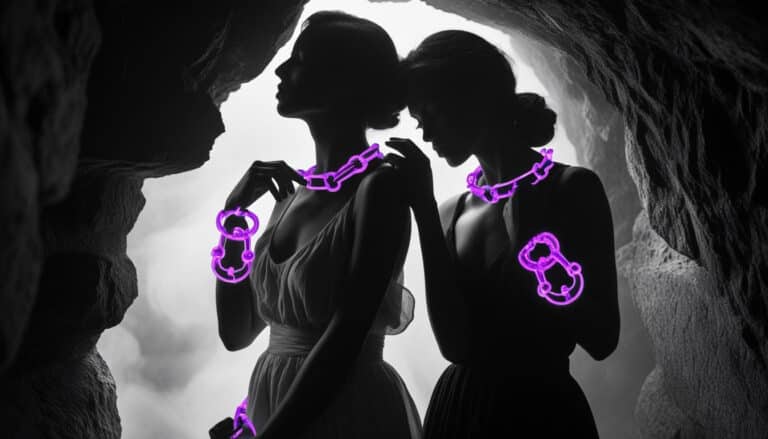
Cataloguer Hesitates as They Wait in the Bath
He does not want them.
He says it to the empty room. The stone keeps the words the way it keeps the cold, and nothing answers, which is what he needs. A sentence with no witness can pass for a fact. He stands with his hands open, ink dried in the creases, and listens to the stair. The stair takes every sound down into the lower hall, where the rest of the house keeps its own night and does not come up. If he is careful, no one will know he spoke.
The cold lives in the walls. It has lived there since he came to count the dead books, and a fire does not move it. One hearth. The fire is small and has done the only work he will admit to: the water is hot. Steam lies over the copper in a thin skin. The bath is low, a trough more than a tub, the kind a man sits in with his knees drawn up; its rim comes no higher than his shin. He poured the water before they came back. A body that has been on the grounds in this weather will need heat. The only heat in the room that is not a lie is in the bath, and in whatever skin will stand inside it. Necessity. He says that one to the fire. It has no pulse. It will do.
The shutters are bolted. Rain beats the wood and stays out. The door is shut. Privacy, then. Not secrecy. He knows the difference in his ribs, because his ribs know the stair. A voice would travel. A cry would travel. Even water knocked hard against copper would travel, if he is careless. So the room presses in. Narrow floor. Narrow bath. The copper will not hold two standing bodies with air between them. He has measured rooms with his eyes for weeks. He does not measure this one. He looks at the fire.
He does not want them.
The latch moves.
Ali comes in with the rain still on them. It runs out of their hair and off the wool, and the cold comes in with them and stands in the room. They are shaking. Not fear. A body that has been out too long in a night that wants its heat back. They stoop a little under the lintel; they always have. They keep their face turned, one side toward the shutter, and he sees it anyway, at the edge of not-looking: a dried smear at the mouth, dark, cracked where the rain did not finish its work. Iron under the smell of wet wool. He does not ask whose. Asking would mean looking.
“The water is hot,” he says. Low. The stair is awake. “That is all it is.”
They nod, or the cold nods them. Their hands come up to the cuffs and fail. The fingers are stiff, not quite theirs. They worry the button. The button does not care. A nail ticks on horn. Then nothing.
He should leave them to it. Competence is what he was brought here for. Distance is what he has been paying out, night after night, in the library, at the table, in doorways. He crosses the stone. Three steps. The floor is cold through his boots, and then their cold is on his throat and his hands, close, a weather of its own. He does not look at their face. He looks at the cuff. Wet cloth. A button too small for fingers that have gone clumsy with rain. He undoes it. His thumb finds the wrist and the wrist is cold enough to hurt him. The hurt runs up his arm and sits in his chest, which is not where he sent it.
His. The first breach is his. He knows it with the button still between his fingers, and he does not stop. Stopping would need a reason he is willing to put in the air, and the stair would carry the reason down to the hall.
The sentence comes up behind his teeth. He keeps it there. It sits against the back of his tongue like a stone held in the mouth, and he swallows around it and goes on with the cuff. They do not finish it for him. They do not touch his hands. They hold still while the cuffs open, one wrist and then the other, and the cold of the skin burns his fingers in the only way cold burns, which is heat coming in too late to be refused.
He steps back because he can still do that. “Get in. Before it goes.” He turns his face to the hearth. Cloth. The thick sound of wet wool leaving a body, dropped on the hearth-stone. A boot. The other boot. He keeps his eyes on the fire and the fire does nothing for him. Water moves: one foot stepping into copper, then the other, and the copper answers with a low knock. He thinks of the hall. Whether the knock was too much. The house does not call up. The house only carries.
When he turns, they are in the bath.
Bare, as the bath requires. The knowing does not spare him the seeing. Spare in the shoulders, older in the body than the face he is not meeting. Long in the leg; the copper under their feet puts their head nearer the beams than his has ever been. Rain still at the ends of the hair, dripping onto the collarbone, each drop a dark bead. The water is shallow. It stands at the calves and climbs, where they have broken it, toward the knee. Steam tries the middle of them and loses. The room is stronger than steam. Warmth is local. It is in the water. It will be, if he does this, under his hands. It is nowhere else.
He takes the soap. He takes the cloth. He puts a cataloguer’s attention in his face and trusts it as far as the rim.
“Hands.”
They give them. Not as a gift. As things that will not work. He takes the left and the cold is a shock, a dead cold, except the tendons move when he closes his fingers, slow, unwilling, alive. He soaps the palm. The lines. The soft web between the fingers. Grit. A smear of leaf. He works it loose. The bath takes the dirt and clouds a little at their shins. He does the right hand the same way, because sameness is a method and method is a wall. His breath is too big for the room. He cuts it down. Theirs is smaller than his and slower, and he hates that, because it does not match the picture in which they pant at a throat. They breathe like a body that has learned not to spend itself.
Wrists. The left, where his thumb has already been. He washes the red line the wet cuff left. Skin. Soap. Heat finding the surface, and under it the deeper cold giving way by inches. He feels the giving. He should not be permitted to feel the giving. He rinses. The cloth drips on his boot. He does not move the boot.
He goes up. He does not decide it. The forearm is still cold, and necessity, if he is going to hide inside that word, does not stop at a joint to protect a man’s pride. The inside of the arm, where the skin is thin and the veins lie blue and quiet. His pulse is in his ears. Theirs is not under his hand yet. He wants it there. He does not want to want it. The not-wanting sits behind his teeth with the first sentence.
“Turn your head.”
He means toward him. He means the stained side. He tells himself the work asks for it, and the work does, and the work is also the only excuse he has built for turning that mouth round to where he can reach it. His voice scrapes the bottom of what the stair might keep.
They turn. The stained side comes round, and the eyes go past him to the fire and stay there, which is a mercy he did not ask for. The blood is old. A dark comma at the corner of the mouth. He puts the cloth to it and looks at the cloth. A stain. Not a mouth. The stain softens. Iron and soap. A little brown-red goes into the weave and is no longer on them. The lips are cold through the cloth. That is a cheat, and it holds until it does not. Under the cloth the mouth is a mouth. He takes the cloth away. He does not say he is sorry. Sorry would be talk.
The throat is next, and the fear is old. It has been vertical since the library, since the first time they stood near enough that a mouth could have bent to his pulse and did not. Their mouth has always been above his, at the height of his brow; his own mouth has always come no higher than their throat, and his throat has lived under theirs by the length of a bend they never made. He never measured the distance. Measuring it would have meant he had thought of it. Now his fingers are the ones at a throat, and he has to reach up for it, and the copper under their feet has made the reach longer, not shorter. He is still the one above. Not in inches. In hands. The one whose hands are at the other’s neck is the one above; that is the whole of it, and he holds to that. It is false. He holds it anyway.
He soaps the side of the neck. The hollow under the ear. The tendon. They stay turned. Their arms hang. Their hands drip into the water. They do not help and they do not hinder. He sets his thumb where the beat should be.
There.
Slow. So slow he thinks he has missed it and is holding only muscle. Then it comes, one thick deliberate stroke, and another, far apart. A clock that does not care about his fear. Not a story. An animal with a slow heart, standing in hot water, letting him wash the night off. The skin under his thumb warms. He feels the warming as if it is being done to his own hand. His own throat, bare, under their mouth by the length of that one bend, answers. Stupid. Exposed. He keeps his chin lifted. If he stays above, the one above is still the one who decides. He can wash a throat and not offer his. He can be of use. Use is not hunger.
Fat and ash from the soap. Wet wool cooling on the hearth-stone. Copper. Rain. The iron he has taken off their mouth. The fire spits once and settles. A drop from their hair hits his wrist and runs under his cuff, and the shirt takes it. The shirt is still buttoned. The shirt is doing the refusing. He is grateful to it, and the gratitude shames him worse than the heat.
He washes the other side because to leave it would be a choice, and a choice would show on the skin. His fingers learn the hinge of the jaw. The place where neck becomes shoulder, harder there, the cold holding longer. He works it until the heat goes in. Their breath changes. Not louder. Deeper. The throat moves under his hand with the pull of air. His hand stays. He tells himself the work is not finished.
They do not touch him back.
He has no defense against that. A touch he could have removed. This matches his refusal exactly and makes it visible: their hands down at their sides, dripping, their mouth not bending to him, no word spent against the word he put in the room. They will not feed where a throat has not been offered in plain speech. He knew the rule. He knows it now in the stomach, as the fact of their hands staying down. It does not cool him.
“That is enough.”
It is not. The cloth is at the base of the throat. His thumb has not left the pulse. The beat comes again, slow, and his own trips and runs, a mismatch he cannot hide from himself. He is hard. The fact arrives without any pretty name, low and heavy, heat where the room has no business putting heat. Shame comes up into his face right behind it. He is glad they are not looking. The trousers hide the rest. He believes, for one more breath, in cloth.
He shifts to step back. The rim is wet where the cloth has been dripping. His boot is against the copper, sole damp. One step and the stone will have his weight. One step and the hand will have to leave, and the sentence will fit in his mouth again, and the height will mean what he needs it to mean. His weight goes onto the back foot. The front foot does not go.
They turn.
Only the head. Slow. The turn of someone who has decided that not-looking is a luxury he has been using alone. The mouth is clean. The face is a face, spare, older around the eyes, and the eyes come down to his and stay there. They do not look at his throat. They do not look at his hand on them. They look at him. The lie, which required an empty room, has a witness.
He almost steps back.
The back foot is ready. The front foot stays at the copper. His thumb is in the slow beat, and the beat does not quicken because they are looking, and that is a cruelty he had not priced. They do not chase the retreat he has not finished. They do not bend out of the water toward the place he has been guarding. They stand in the shallow heat with his hand still on their throat and their own hands down and their eyes open, and they wait.
The water settles against the copper with a low knock. His breath goes in and does not come all the way out. The stair can have the next word, if he gives it.
He does not give it.
The height is still his. His hand will not leave. His foot will not finish the step. He can feel the height about to fail him, and he is not going to stop it.
They slide.
The throat leaves his thumb without a struggle, skin going down through his palm, the hinge of the jaw, the mouth he will not look at and then does, because the eyes have not let him go. The eyes stay open all the way down. Shoulders pass the reach of his hand. The collarbone. The cloth goes out of his fingers; he does not feel himself let it go, only hears it take the water with a small wet sound and sink. The water takes the knees with one low knock on the copper, a sound the stair could carry and does not answer, and the legs go under to the thigh. Shallow heat closes over them. What was above his own mouth is at the height of his belt, and the eyes are the same eyes.
His hand hangs where the beat was. Empty. The height is gone out of the room through the floor. He is the one standing. It does not mean what it meant a breath ago.
Their hands come up out of the bath and find his waist. Water runs from the fingers into the shirt, cold for a moment and then the heat of the copper, and the cloth drinks it and goes thin against his stomach. Soap-film. The weight of two wet palms. They do not pull. They set themselves there and stay, looking up, and the looking is not a petition. It is the same looking, moved lower, so the lie has to live with the new measure of the room.
The first button is small and horn and his. A nail ticks it. The tick is the loudest thing. His breath goes in on it and does not come back out. He does not help. Helping would be a word. The button gives. Air that is not the water finds a strip of his chest, and the strip answers like a nerve.
They do not look down to the work. The eyes hold his face while the fingers worry the second button, stiff still, not clever, patient with the wet thread. His breath stumbles when it yields. The shirt opens another finger. He feels the opening in his throat, bared, the place he came in here to keep.
“I do not want—”
He puts it in the air because the sentence has been his only wall and the wall is at his waist now, dripping. The third button fights. Their thumb works it. The word loses its end on the small sound of horn leaving cloth. What is left is breath pulled in and not finished, and the stair can have that if it wants. It takes nothing. The house keeps its own night below.
The shirt is open. Their hands are on his stomach, warmer than the rain, not warm like his. He feels the ribs of their fingers. He feels his own skin trying to go toward the touch and calls it nothing, and the nothing does not hold. The clothes that were doing the refusing are half off him. He hates the shirt for failing and is glad of the failure in the same ugly place, low.
They find the waistband without looking. The button there is stubborn. It catches once against a nail and holds, and his breath catches on the hold as if the hold were mercy. It is not. The button gives. Their wet hands take the wool at his hips and bring it down, the dull drag of it over skin, past the thighs, past the knees, until the tops of his boots stop it and it hangs there, heavy and damp, a hobble. The room’s air hits his cock, and the shame comes up into his face where they can see it, because they have not once dropped their eyes to the place their hands have gone.
He could step back. The back foot knows the stone. The front foot is against the copper and does not go, and now the wool at his ankles would make the step a stumble, a sound. Their fingers close around him, not clever, sure enough, soap and heat and the drag of water, and the shock of it is not myth. It is a hand. A hand on a fact. His own hands have nowhere honest to be. The rim is down at his shin, out of any reach that would leave him standing. One hand finds their shoulder instead, wet, the bone of it, and grips until his fingers print the skin. The other hovers, then settles, shaking, in their wet hair, not pushing, not guiding. Staying. The staying is the part he will not be able to call necessity.
They work him there, kneeling, eyes up. Slow, because their hands are still learning warmth, and because the room will not bear a fast sound. Water knocks the copper in small shifts when their shoulder moves under his hand. His breath keeps going in and failing to complete itself. The heat is blunt and heavy and exact. Gravity has him by the spine. He looks at their face because they will not let the looking be anywhere else, and what he sees is not hunger spent on a throat. It is attention. He is being seen wanting, and the seeing does not flinch, and that is worse than teeth.
The peak takes him without any decency. It comes up from the soles, through the grip on their shoulder, through the shame in his face, and breaks out of him in thick pulses he cannot hold back, only shorten. The sound comes with it, a groan the size of the whole stair, and he gets his teeth into it at the root; what reaches the room is a hard breath driven out through the nose and the water giving one low knock against the copper when their shoulder takes his weight. That is what the stair gets. It is all the stair gets. Spend hits their wrist, their chest, the water, hot and then immediately just a fact cooling. His knees want the floor. He locks them. The hand in their hair slackens. The hand on their shoulder slackens. For a moment he is only weight and heat and the miserable relief of a body that has stopped lying, and they are still kneeling, still not finished, still watching the end of it move across his mouth.
He does not speak. There is nothing the stair is allowed to have.
The slack is in his arms. They lean forward over the low rim and their face comes against the inside of his bared thigh, wet, already cooler than the spend, the bath giving its heat back to the stone. Not a kiss he can name. A press. Their breath there, smaller than his, controlled until it isn’t. Then their hand comes up out of the water and finds his wrist in their hair and takes it. Down. He has to fold for it, deep, bent double over the copper with the wool hobbling his ankles, and he folds. Over the rim, into the bath, which has lost a degree since he last felt it, and they set his palm where they want it, low, in the crease where thigh meets body, soap-filmed, useless, and they take the uselessness. He bends to let them have it. His other hand keeps their shoulder, the only thing in the room at a height he can hold. They move against the palm, under the water, a short drag, another, careful of the copper, careful of the sound. Their forehead stays on his thigh. He feels the slow heart in them there, in the crease, where the big vein runs near the skin. It does not race. It thickens. Their fingers bite his hip once and let go.
They break later, and smaller. A shudder he would have missed if his palm were not on it. Breath pulled in against his thigh and not let out as a voice. The muscle under his hand goes tight and then gives, a few hard beats, heat, wet that is not only the bath. Their forehead stays against him until the beat thins back to the clock he washed, slow, far apart. No word. The water goes still.
He takes his hand back out of the water. He straightens, and the straightening is a long way. He puts the hand on his own throat.
Unbroken. The skin is his. No puncture, no smear, only his pulse knocking stupid and fast under the pads of his fingers, a mortal count, intact. He stands with that knowledge and the shirt open and the wool at his boots, and the fear that lived in the vertical has nowhere to sit. Nothing was taken. His hands stayed. The word is still in the room, ended wrong.
The water is lukewarm. A skin of soap turns on the surface when they shift. They do not rise. The cold is in the copper now, climbing. He sees it take them at the shoulders, a fine shake starting that is not the shake of rain this time, only a body that has spent its heat and is being asked to kneel in what is left. They stay until staying is a punishment. Then they stand.
The height comes back into the room, more than his, as it has always been. Standing in the copper they are a head and more over him; they step out onto the stone and lose the depth of the bath and are still above him, their mouth at the height of his brow, his own mouth at the level of their throat, where it was in the library, where it has been all along. It is not the old meaning. He knows it in the place the sentence used to be. They do not bend to his throat. They do not reach for anything. Water runs off their calves onto the floor and finds the cracks.
Neither of them speaks.
He bends and takes the wool up from his boots. It is damp through where it lay against the copper, and cold, and he pulls it over his skin and fastens the button they undid, and the fastening is a small sound he makes himself and does not like. He bends again, to the shin-high rim, and fishes the cloth out of the lukewarm water. It is already wet. He wrings it anyway. The twist hurts his fingers. Water runs back into the copper, a thin sound the stair could have and does not want. He stands in front of them on the cold stone, the shirt open, the cloth in both hands, nothing left in the room to wash, and he does not put it down.